Quick Scan — What You'll Learn
I remember standing in a tiny gold panning stream in Montana years ago. The guide scooped up gravel, swirled it in water, and there — a few tiny yellow specks glinting at the bottom. That moment stuck with me. Such a tiny amount, yet it represented so much effort, history, and trust. That's the core of why gold is valuable: it's not just rare, but it's been universally accepted as a store of value for millennia. Let's break down the real reasons — beyond the common talking points.
1. Scarcity — The Geological Reality
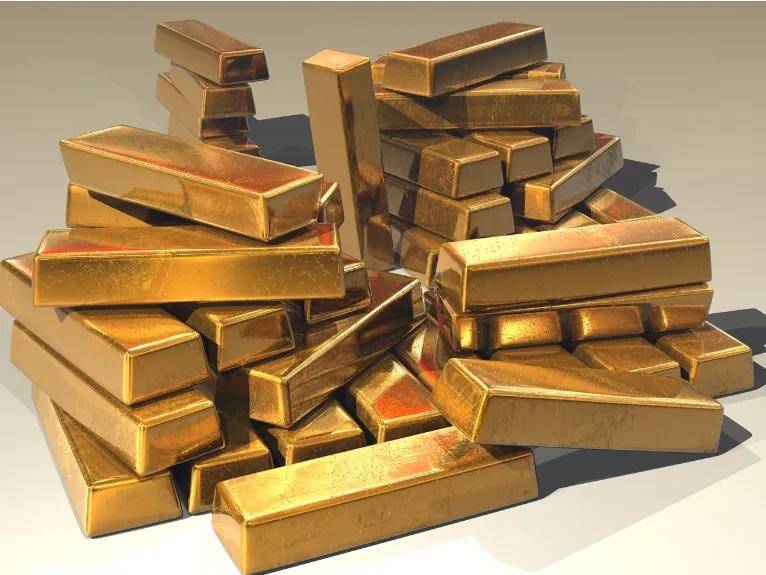
Gold is scarce. All the gold ever mined would fit into a cube roughly 21 meters on each side. That's about 200,000 tonnes. Sounds like a lot, but when you consider that each year we mine only about 3,000 tonnes — and demand keeps rising — the scarcity becomes obvious.
Geological Rarity
Gold forms in supernovae or neutron star collisions, and it's distributed thinly in the Earth's crust. Average concentration is about 0.004 parts per million. To get one ounce of gold, you need to dig up and process roughly 30 to 50 tonnes of ore. That's not efficient — it's brutal. I once visited a mine in Nevada where they showed me the massive trucks hauling ore; the scale is mind-boggling.
Mining Challenges
Most easy-to-reach gold deposits are already exhausted. New finds are deeper, lower grade, and in politically unstable regions. This pushes up extraction costs — currently averaging around $1,200 per ounce for major miners. That cost floor is one reason gold rarely collapses below that level for long.
“Gold is valuable because it's hard to get. Not just hard, but increasingly harder every decade.”
2. History as Money and Store of Value
Gold has been used as money for over 5,000 years. The Lydians minted the first gold coins around 600 BC. Since then, every major civilization — Romans, Chinese, Incas — used gold for trade and wealth storage. Why? Because it doesn't tarnish, it's divisible, portable, and universally recognized.
Even after we left the gold standard in 1971, central banks still hold massive gold reserves. The US holds over 8,000 tonnes. Germany, Italy, France — all hold thousands of tonnes. If gold had no value, why would the most sophisticated financial institutions in the world keep it?
I've spoken with portfolio managers who admit: “Gold is the only asset that is no one else's liability.” That's huge. When you hold a stock or bond, you rely on someone else's promise. Gold is just itself.
3. Safe Haven During Crises
Gold shines brightest when everything else crashes. During the 2008 financial crisis, gold rose from around $800 to $1,900 by 2011. During COVID panic in March 2020, gold initially dipped with everything else (liquidity crunch), but then recovered and hit new highs within months.
Inflation Hedge
Gold's reputation as an inflation hedge is real — but imperfect. Over long periods (50+ years), gold has maintained purchasing power. But in short bursts, it can lag. The real power is in hedging against extreme inflation or currency debasement. When governments print money like crazy, gold tends to catch up.
Geopolitical Uncertainty
Wars, sanctions, political turmoil — gold is the go-to. I recall a client in 2022 during the Ukraine war who moved a chunk of his portfolio into gold ETFs. He said, “I don't trust any currency right now.” That sentiment drives demand.
4. Industrial and Tech Demand
About 10% of annual gold demand comes from technology — electronics, medical devices, aerospace. Gold is an excellent conductor, doesn't corrode, and is biocompatible. Your smartphone contains about 0.034 grams of gold. It's used in connectors, switches, and memory chips. Medical implants often use gold because the body doesn't reject it.
While industrial demand isn't huge compared to jewelry or investment, it's stable and growing. As we produce more electronics, that demand provides a floor.
5. Central Bank Reserves — Why They Hoard Gold
Central banks are net buyers of gold for over a decade now. In 2023, they bought about 1,000 tonnes. Why? Because gold is a reserve asset that is independent of any government. It diversifies away from US dollar dependence. Countries like China, Russia, and Turkey have been piling up gold specifically to reduce exposure to Western financial systems.
I once read a report from the World Gold Council that said central banks view gold as a “crisis insurance.” They don't expect to sell it — they just sleep better knowing it's there.
| Country | Gold Reserves (tonnes) | % of Total Reserves |
|---|---|---|
| United States | 8,133 | 78% |
| Germany | 3,355 | 67% |
| Italy | 2,452 | 65% |
| France | 2,437 | 64% |
| Russia | 2,333 | 23% |
% of total reserves shows how much faith these nations place in gold relative to currencies and bonds.
6. Common Misconceptions About Gold
- “Gold is a bubble.” Bubbles are based on speculation and can pop. Gold has been valuable for 5,000 years. That's not a bubble.
- “Gold has no intrinsic value.” Intrinsic value is subjective. But gold's utility in electronics, dentistry, and as a store of wealth gives it real value.
- “Gold is only for doomsday preppers.” Central banks and billionaires hold gold. It's mainstream.
- “Gold always beats inflation.” Not in the short term. Over very long periods it preserves purchasing power, but it can underperform other assets for years.
One mistake I see new investors make: they buy gold at the peak of a hype cycle (like $2,000+ on a geopolitical event) and then panic sell when it drops. Gold is a long-term hold, not a quick trade.
Frequently Asked Questions
Fact-checking: Data on gold reserves sourced from World Gold Council (2024 Q2 report). Mining cost estimates from industry analysis. Personal experience from Montana panning trip and Nevada mine visit.